Feeding Therapy: Eating Involves More Than Just Food


When we think about feeding, we often think about the food itself: what a child eats, how much they eat, or whether they are willing to try new foods. Successful eating actually requires many different skills working together.
At Innovative Therapy Center, we understand that feeding is about more than what is on your child’s plate. Eating involves the coordination of multiple developmental systems, including sensory processing, motor skills, communication, attention, regulation, and swallowing.
The Skills Behind Eating
Sensory Processing
Children use all their senses during mealtimes. Taste, texture, temperature, smell, and even the appearance of food can influence how a child responds to it.
Fine Motor Skills
Feeding involves much more than simply putting food in our mouths. Children use fine motor skills to pick up food, use utensils, hold cups, and manage different types of foods.
Communication
Communication plays an important role at mealtimes. Children need ways to express hunger,
fullness, preferences, discomfort, and when they need help.
Family Support
Caregivers play an important role in creating positive and predictable mealtime experiences.
Modeling eating, establishing routines, and providing emotional support can all help children feel more comfortable during meals.
Behavior & Environment
A child's mealtime environment and past experiences with food can influence how they respond to eating. Understanding these factors can help therapists and families create more positive associations with food.
Attention & Regulation
Eating requires a child to be able to attend to the meal and remain regulated enough to
participate. For some children, staying seated, managing sensory input, or transitioning to
mealtime can be challenging.
Swallowing
Safe eating also requires coordinated swallowing skills. Children need to coordinate the muscles involved in moving food and liquids through the mouth and swallowing safely.
Oral-Motor Skills
The lips, tongue, cheeks, and jaw all work together during eating. These skills help children bite, chew, move food around their mouths, and manage different textures.
Why Does This Matter?
When one or more of these areas are challenging, mealtimes can become stressful or difficult for children and their families. A child may refuse certain textures, struggle to chew, have difficulty sitting through a meal, or become overwhelmed by the sensory experience of eating. Feeding therapy looks at the whole child, not just the food. Through individualized, play-based, and sensory-based strategies, feeding therapy can help children develop the skills they need to participate more comfortably and successfully in mealtimes.
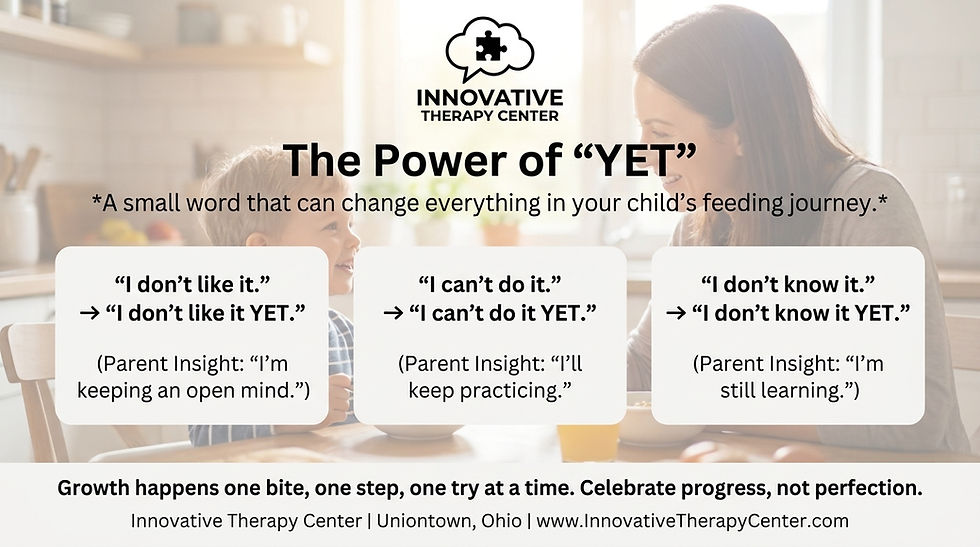
Small Steps Can Make a Big Difference
Progress in feeding doesn't always mean immediately eating a new food. For some children,
progress may look like tolerating a new food on their plate, touching it, smelling it, bringing it to their lips, or eventually taking a bite. These small steps can help build confidence and create more positive experiences around food. When therapists and families work together, children can develop skills that support more enjoyable and successful mealtimes.


Comments